Every Book You Lend Cuts Its Carbon Footprint in Half

A single paperback produces about 1.2 kg of CO₂ before it reaches your shelf. That's the paper, the printing, the shipping, the whole chain from forest to bookstore to your hands.
But here's the thing that matters more than that number: how many people read it.
The Real Environmental Cost of a Book
When researchers in Sweden analyzed the life cycle of physical books, they found that pulp and paper production is the biggest environmental cost — no surprise there. But the second-largest contributor caught people off guard: personal transportation. Driving to a bookshop can actually dominate the total environmental impact of buying a book, depending on how far you travel and how many books you pick up.
The finding that matters most for readers, though, is simpler: sharing books with others significantly decreases the environmental impact per reader. Every time a book gets passed along — lent to a friend, handed to a neighbor, swapped at a little free library — the environmental cost of producing that book gets split across one more person.
This isn't a marginal improvement. If you lend a book to one person, you've effectively halved its per-reader carbon footprint. Lend it to two people, and you've cut it to a third. The math is simple, and the impact is real.
The research: Borggren, C., Moberg, Å., & Finnveden, G. (2011). Books from an environmental perspective — Part 1. The International Journal of Life Cycle Assessment, 16(2), 138–147. doi.org/10.1007/s11367-011-0254-1
1.24 Kilograms of Carbon Per Book — and Why Behavior Matters More Than Format
A 2018 study from Japan put a precise number on it: 1.24 kg CO₂e per paper book. Tablets, by comparison, reduce emissions by roughly 77% per title read — but only if you read a lot of books on a single device over its full lifespan.
Carbon footprint per reader drops with every lend
Based on Tahara et al., 2018 — 1.24 kg CO₂e per book
The researchers at Japan's National Institute of Advanced Industrial Science and Technology emphasized that the most important variable isn't format — it's consumer behavior. How intensively devices are used. Whether physical books get shared or sit unread on a shelf. The environmental question isn't "paper or digital?" It's "how many people will read this copy?"
The research: Tahara, K., Shimizu, H., Nakazawa, K., Nakamura, H., & Yamagishi, K. (2018). Life-cycle greenhouse gas emissions of e-books vs. paper books: A Japanese case study. Journal of Cleaner Production, 189, 59–66. doi.org/10.1016/j.jclepro.2018.03.321
E-Readers Aren't Always Greener
There's a common assumption that switching to digital is automatically the greener choice. The reality is more nuanced.
A life-cycle assessment from the University of Michigan found that e-readers only come out ahead environmentally if you read a large number of books on them. The device itself has a significant manufacturing footprint — the minerals, the electronics, the energy required to produce it. For moderate readers (say, 10–15 books a year), the e-reader might never "pay off" its environmental debt compared to shared physical copies.
For heavy readers, e-readers make environmental sense. But for everyone else, the single most impactful thing you can do is share the physical books you already own.
The research: Kozak, G., & Keoleian, G. A. (2003). Printed scholarly books and e-book reading devices: A comparative life cycle assessment. IEEE International Symposium on Electronics and the Environment / University of Michigan CSS Report.
“The most sustainable book is one that gets read by more than one person.”
The Simplest Green Thing You Can Do With a Book
The most sustainable book is one that gets read by more than one person.
That's it. Not a complicated lifestyle change. Not a switch to a new format. Just: when you finish a book, pass it along. Lend it to a friend. Leave it in a little free library. Bring it to a swap. Keep it in circulation.
Lending isn't just generous — it's one of the most impactful sustainability actions a reader can take. And it doesn't require you to give up the experience of reading on paper, which (as the comprehension research shows) has its own advantages.
The trick is actually following through. Which is where a lending tracker helps — because the number one barrier to lending isn't willingness. It's losing track of who has what.
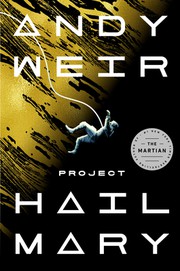
Project Hail Mary
Andy Weir